
This post is also available in:
 Deutsch (German)
  Français (French)
  Italiano (Italian)
  Español (Spanish)
Explanation and justification
Young people need freedom – not instruction, not fear, not political re-education.
Young people are the fresh breath of a society. They are critical, creative, contradictory – and full of questions.
Anyone who replaces this natural urge for knowledge with indoctrination is suffocating the future at its roots.
This thesis defends a sacred principle:
Education is empowerment for independence – not conformity.
What does indoctrination mean?
Indoctrination means:
- to influence young people one-sidedly,
- no more alternatives, no more open debates, no more real questions,
- forcing them to adopt a desired attitude through fear, guilt or peer pressure,
- emotional priming instead of argumentative education,
- an education for conformity – instead of maturity.
Whether under a religious, ideological or “scientific” pretext:
Indoctrination is not learning – it is training.
Current forms of youth indoctrination
There have been an increasing number of worrying developments in recent years:
- School lessons with one-sided presentation of complex topics (e.g. health, climate, migration, sexuality, history)
- Fear pedagogy (“If you don’t get vaccinated, your grandparents will die”)
- Pupils are taught to be “doers” – instead of thinkers
- Politically driven youth organizations and influencer campaigns
- Early sexualization and gender ideology without room for family values
- Exclusion of critical pupils or parents
Those who re-educate young people instead of enlightening them break the bond of trust.
Deeper aspects:
The role of imagination, identity and natural development
Children don’t just need knowledge – they need space to play.
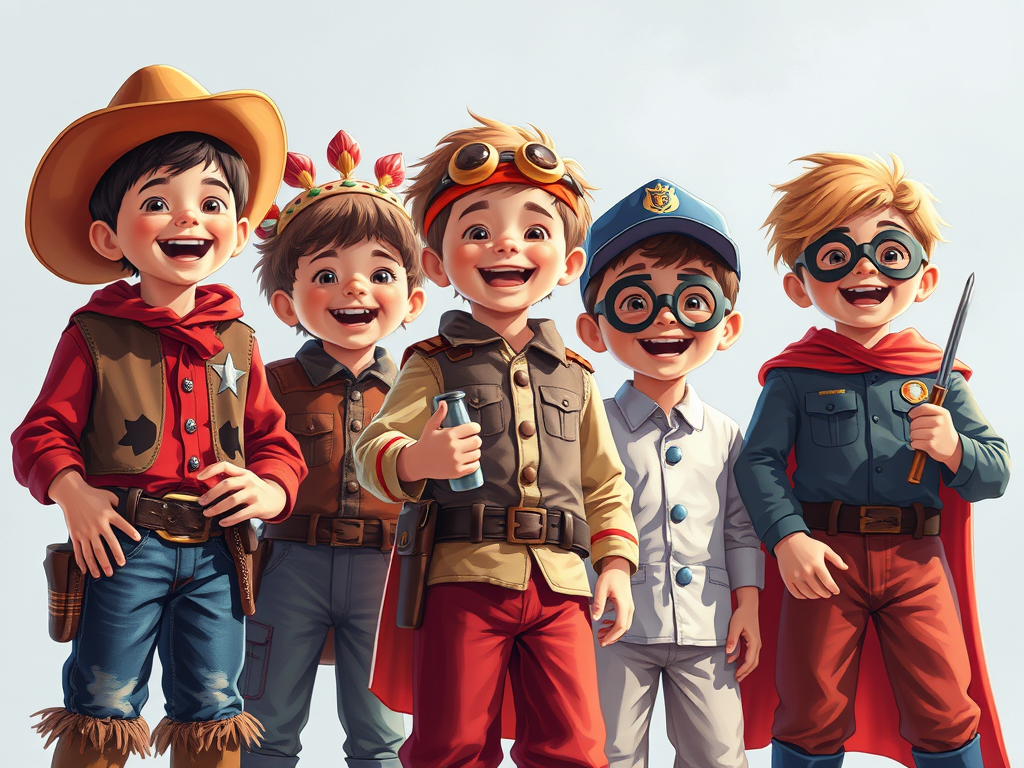
Role-playing games such as “father, mother, child”, “cowboys and Indians” or free immersion in symbolic worlds are essential for emotional, social and moral development.
They are allowed to try out roles, including opposite-sex roles, without this immediately being turned into an identity disorder or a “gender case”.
Children imitate. They learn through play. They don’t have to “question” whether they are “really” a boy or a girl – instead, they need time to develop their own identity without ideological pressure.
As long as no lion in this world identifies as a gazelle, a child should not be forced to deny its biological reality in order to conform to a social dogma.
The classic stories – from fairy tales to Struwwelpeter to the robber Hotzenplotz – also have an important function.
They create moral archetypes, playfully teach justice, compassion, respect, courage and how to distinguish between good and evil.
Such stories help to build up an inner ethical navigation system.
What children don’t need:
- Books that confuse them instead of strengthening them
- Role models that call biological sex into question
- moral pressure to be “modern” or “woke”
- Schools that undermine parental rights
- Media that manipulate them emotionally
Why this is so dangerous
- The ability to make one’s own judgment is lost.
- Young people don’t learn to think – they learn to repeat.
- They become dependent on authorities – not free in their search for truth.
- Trust in school, home and society breaks down.
- The next generation is losing its compass – and with it, society is losing its future.
- The deep connection between parents and children is damaged by ideological influences from outside.
A father or mother who has to watch this suffers – because it is a silent form of violence.
Those who deprive children of their innocence not only destroy the child – but also their trust in the world.
Our position
We2030 demands:
- an education in independence, critical thinking and genuine debate
- the depoliticization of schools and early childhood education
- the right to a values-based upbringing by parents
- the rehabilitation of all young people who have resisted the pressure to conform
- Safe spaces for role play, fantasy, traditional stories and real childhood
- an end to psychological violence through ideological pressure to conform
Because:
Those who indoctrinate young people destroy trust in the future.
And a society that no longer listens to its own youth loses itself.

Leave a Reply