
This post is also available in:
 Deutsch (German)
  Français (French)
  Italiano (Italian)
  Español (Spanish)
Explanation and justification
Democracy thrives on the commitment of its citizens – not on their submission.
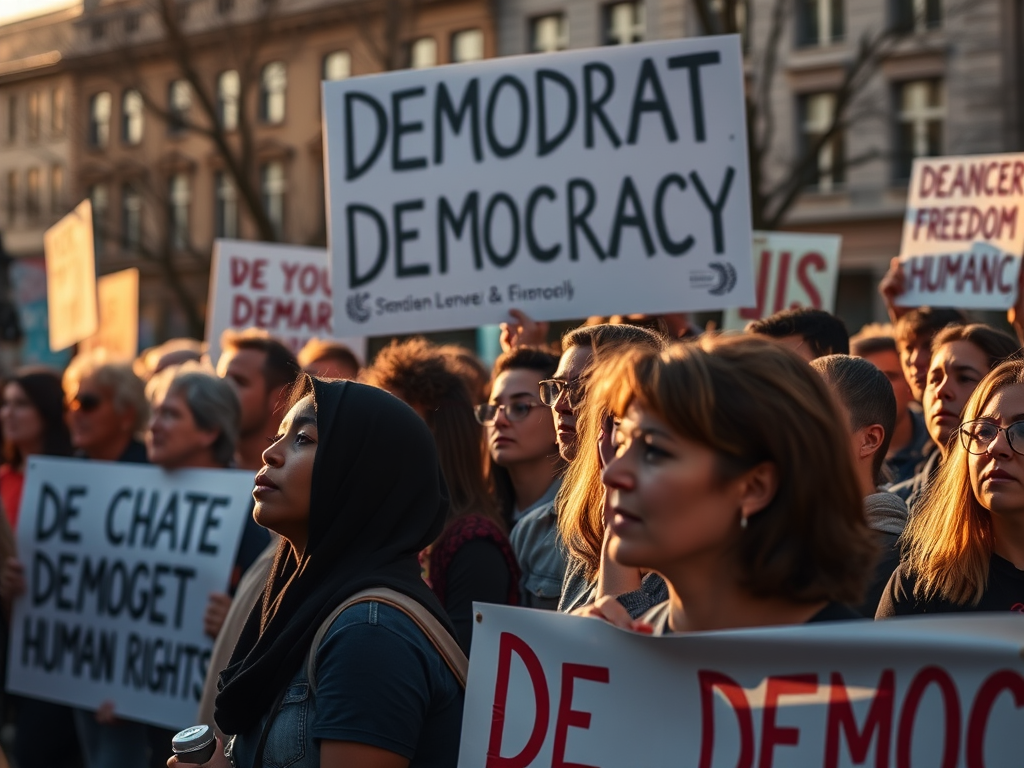
Anyone who defends it, points out grievances, demands fundamental rights and opposes the abuse of power is not acting radically, but democratically.
This thesis sets a clear boundary against a dangerous narrative:
Criticism is not extremism. Resistance to injustice is not radicalism. And defenders of democracy are not enemies of democracy.
What we are experiencing: The twisting of concepts
We often experience this in times of crisis or when systems become authoritarian:
- Citizens who invoke fundamental rights are defamed as “troublemakers”.
- Peaceful protests are portrayed as “hostility to the state”.
- The media and politicians delegitimize opposition with terms such as “conspiracy theorist”, “Reichsbürger”, “conspiracy theorist”, “right-wing” or “enemy of democracy”.
Anyone who disagrees is not heard – but suspected.
That is dangerous. Because:
A democracy without dissent is not a democracy – it is a closed ideology.
What constitutes real democracy
- Rule of law – also for critics.
- Freedom of expression – even for the uncomfortable.
- Freedom of assembly – also for minorities.
- Opposition – not as an enemy, but as a controlling authority.
Democracy needs precisely those people who are prepared to stand up for it, even if it is uncomfortable or risky.
Why this accusation delegitimizes
Those who categorize committed citizens as “extremist” achieve three things:
- He intimidates others from speaking out critically.
- It shifts the political debate from content to defamation.
- It destroys the pluralistic basic idea of democracy.
This does not protect democracy – it disguises authoritarian thinking.
Our position
We2030 says:
- The defense of freedom, fundamental rights and the rule of law is the highest form of democratic responsibility.
- Criticism of the state, measures or institutions is not extremism – it is an expression of civic duty.
- Those who stand up for enlightenment, separation of powers, freedom of opinion and direct democracy are at the heart of the democratic ethos.
That is why we demand:
- the rehabilitation of peaceful democracy movements
- the protection of all citizens from state, media or social defamation on the basis of legitimate criticism
- a clear distinction between extremist violence and democratic protest
Anyone who defends democracy is not an extremist.
Anyone who calls him that has already left democracy.

Leave a Reply