
This post is also available in:
 Deutsch (German)
  Français (French)
  Italiano (Italian)
  Español (Spanish)
Explanation and justification
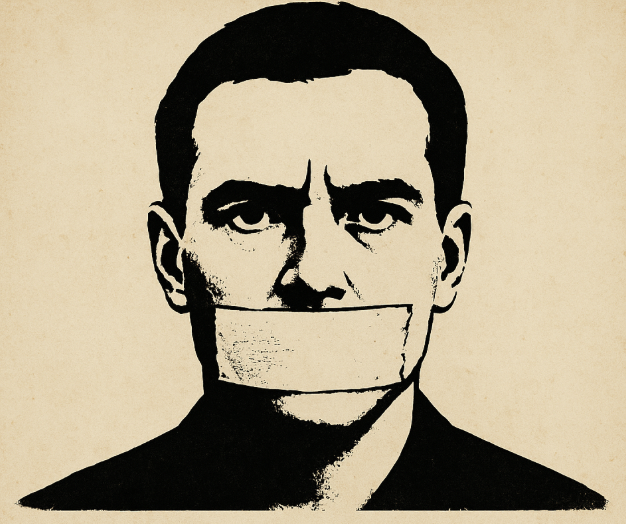
Criticism is the pulse of every free society.
It is the living sign of a democracy, the early warning system of power, the corrective of institutional errors.
Where criticism is allowed, power can be questioned, scrutinized and corrected.
Where it is suppressed, arbitrariness, corruption and tyranny grow.
A state, a system, an institution that seals itself off from criticism loses its legitimacy – because it reveals:
It no longer serves people, but itself.
Why criticism is indispensable
Criticism is not an attack, but a sign of spiritual alertness.
It shows that a person is taking responsibility – for the common good, for truth, for development.
Criticism is:
- a tool for finding the truth: Only if theses can be doubted can a distinction be made between error and knowledge.
- a form of vigilance: power needs counter-power, control needs counter-control.
- an outlet for resentment, without violence: criticism channels frustration constructively. Suppressed criticism, on the other hand, often discharges destructively.
- The prerequisite for progress, learning and change: whether in science, art, medicine or politics – without criticism there is stagnation or regression.
Freedom of opinion and speech are therefore not just civilizational ideals, but concrete protective mechanisms against the abuse of power.
Where they are absent, a society of fear – not of truth – emerges.
What censorship really is
Today, censorship is often sold as a “protective measure” – against disinformation, against hatred, against “social division”.
But that is an illusion.
Censorship is in truth:
- the attempt to end discussions before they have even been held,
- the will to secure hierarchies of power by delegitimizing criticism,
- the instrument for suppressing uncomfortable truths that are politically, economically or ideologically dangerous,
- the attempt to gain control over reality by silencing alternative points of view.
Censorship does not protect against lies – it protects lies from being exposed.
Those who cannot stand criticism are not afraid of error – but of the truth.
Current forms of censorship
In democratically constituted societies, censorship no longer manifests itself primarily through book burnings or open bans.
It is more subtle, more sophisticated – and therefore all the more dangerous. It operates through:
- “Fact checks” that devalue dissenting opinions across the board with apparent objectivity,
- Deletion of posts on social networks without any legal basis or transparent justification,
- Platform blocking, shadow banning, demonetization – digital methods of social exclusion,
- Vague legal terms such as “delegitimization of the state”, “hate speech” or “disinformation” that create a climate of intimidation,
- Professional repression against critical doctors, scientists, journalists, artists or civil servants who deviate from the official line.
Censorship doesn’t just destroy individual voices – it destroys the debate itself.
And without debate, there is no democracy.
Historical and international examples:
1. the White Rose (Germany, 1942-1943)
The siblings Hans and Sophie Scholl and their fellow campaigners in Munich distributed leaflets against the Nazi regime.
They warned of injustice, called for resistance against Hitler and appealed to conscience.
Their criticism was true – but it was punished as “high treason”.
Hans and Sophie Scholl were executed on February 22, 1943.
Their courage lives on as a reminder: truth needs protection – not persecution.
2 Julian Assange (Australia / Great Britain / USA)
In 2010, the founder of WikiLeaks published leaked documents proving war crimes committed by the US army in Iraq and Afghanistan, including the shooting of civilians.
Assange became the target of worldwide persecution, isolated in an embassy for years, later imprisoned in Belmarsh maximum security prison.
Not because he had lied – but because he had documented the truth.
3 Edward Snowden (USA / Russia)
In 2013, the former NSA employee uncovered the mass surveillance of the US and international population by intelligence agencies.
He was prosecuted and has been living in exile ever since.
His revelations sparked worldwide outrage – not against the surveillance agencies, but against him.
4. Nelson Mandela (South Africa)
Mandela was branded a terrorist for decades because he opposed the apartheid regime.
He spent 27 years in prison – for a truth that is now considered a self-evident human right: all people are equal.
Today he is revered – back then he was censored.
5. Ai Weiwei (China)
The Chinese artist and activist criticized corruption, environmental destruction and human rights violations in the People’s Republic of China.
He was arrested several times, his works banned, his voice suppressed – even though he spoke truths that many in the country shared but were not allowed to express.
6. Dr. Simon Goddek, Prof. Bhakdi, Dr. Bodo Schiffmann, Dr. Wodarg and many others (International, since 2020)
During the COVID-19 crisis, numerous scientists and doctors who expressed well-founded criticism of measures, vaccination policy or lockdowns were censored, defamed, excluded from professional associations or deleted from platforms.
They asked questions, presented data, warned – and were declared “Gefährder” (“dangerous”) for doing so.
In many cases, it only became clear months later that their criticism was justified.
7. Oleg Orlov (Russia, 2024)
The human rights activist and co-founder of Memorial was sentenced to 2.5 years in prison in 2024 for calling Putin’s war against Ukraine “fascist”.
His “crime”: an essay.
8. Prof. Carl Heneghan & Dr. Tom Jefferson (UK)
The two scientists from the Oxford Centre for Evidence-Based Medicine criticized the evidence behind lockdowns, mandatory face masks and school closures during the coronavirus pandemic.
Although they presented renowned studies, their voices were relativized by fact-checkers, discredited by the media and censored on social platforms.
The public debate gave way to a climate of exclusion – not because they were spreading false information, but because their facts were politically undesirable.
9 Dr. Jordan Peterson (Canada)
The psychology professor became internationally known because he opposed a Canadian law that wanted to introduce the mandatory use of certain gender pronouns.
He did not criticize the people in question – but the state’s compulsion to regulate language.
His stance led to massive media attacks, calls for a boycott, restrictions on his university teaching and ultimately the revocation of his psychotherapeutic license.
Not because he had acted unethically – but because he disagreed.
10. trucker protests in Canada (2022)
Tens of thousands of Canadian truck drivers protested peacefully against mandatory vaccinations and excessive coronavirus measures.
Instead of dialog, the Trudeau government opted for defamation: they were labeled extremists, even though they did not cause any violence.
accounts were frozen, donation platforms blocked, supporters monitored – a completely extrajudicial form of digital repression against citizens who expressed a dissenting opinion.
11. Dr. Simon Thornley (New Zealand)
The epidemiologist at the University of Auckland disagreed with New Zealand’s “zero COVID” strategy and warned of the risks of new vaccines.
Despite factual and scientifically based statements, he was labeled “dangerous” in the media, shunned by experts and pushed out of the public discourse.
Not because he was talking nonsense – but because he did not submit to the consensus.
12th Billy Te Kahika Jr (New Zealand)
Musician, politician and activist who publicly spoke out against authoritarian measures during the corona crisis.
His social media accounts were deleted, events banned, supporters criminalized – not for violence or agitation, but for opinions critical of the government.
The state acted as if it were in a state of war against words – not against deeds.
13. Prof. Didier Raoult (France)
The French star virologist became famous when he advocated the use of hydroxychloroquine at the beginning of the pandemic.
What followed was an unprecedented downfall: censorship of his research, political influence on his clinic, massive defamation in the press.
Although studies later supported many of his statements, his reputation remained damaged – not because he was wrong, but because he was uncomfortable.
14. gilets jaunes – the yellow vests (France)
The movement began as a protest against rising fuel prices, but quickly developed into criticism of social inequality and a lack of civic participation.
The state’s response: massive police violence, restrictions on freedom of assembly, censorship of alternative reporting, surveillance of organizers.
What began as a democratic protest was reinterpreted as a “threat” by targeted state measures – and systematically suppressed.
These examples show impressively:
Censorshipis not a relic of past dictatorships – it is a real danger in the midst of modern democracies.
It does not always occur with open bans – but in the form of pressure, exclusion, de-platforming, withdrawal of licenses, media agitation or targeted delegitimization.
Truth is often uncomfortable.
But you can recognize a free society by how it deals with uncomfortable truth.
The value of freedom of opinion is not shown by applause – but by contradiction.
Why this is dangerous
Censorship is not a side effect – it is a system error.
Denn:
- Where criticism is forbidden, no error can be recognized.
- Where dissent is suppressed, scientific honesty dies.
- Where dissenting voices are considered “enemies”, political paranoia arises.
- Where truth becomes a threat, lies are a matter of state.
- Anyone who eliminates criticism not only destroys freedom – but also trust.
Censorship is an act of fear.
And a society that is afraid of the truth is not stable – it is sick.
Our position
We2030 demands:
- An end to censorship – by the state, platforms, algorithms, media and scientific institutions
- Full protection of critical voices, regardless of their popularity or political classification
- Restoring a genuine culture of discussion – with respect, openness and a willingness to disagree
- A public review of all cases of politically motivated censorship, exclusion and repression, especially since 2020
- The rehabilitation of those who have been unjustly defamed, deleted or silenced
Because:
Anyone who censors criticism has something to hide.
A society that no longer allows criticism is not free – it is on the path to authoritarianism.
Truth needs courage. And protection.

Leave a Reply