
This post is also available in:
 Deutsch (German)
  Français (French)
  Italiano (Italian)
  Español (Spanish)
Explanation and justification
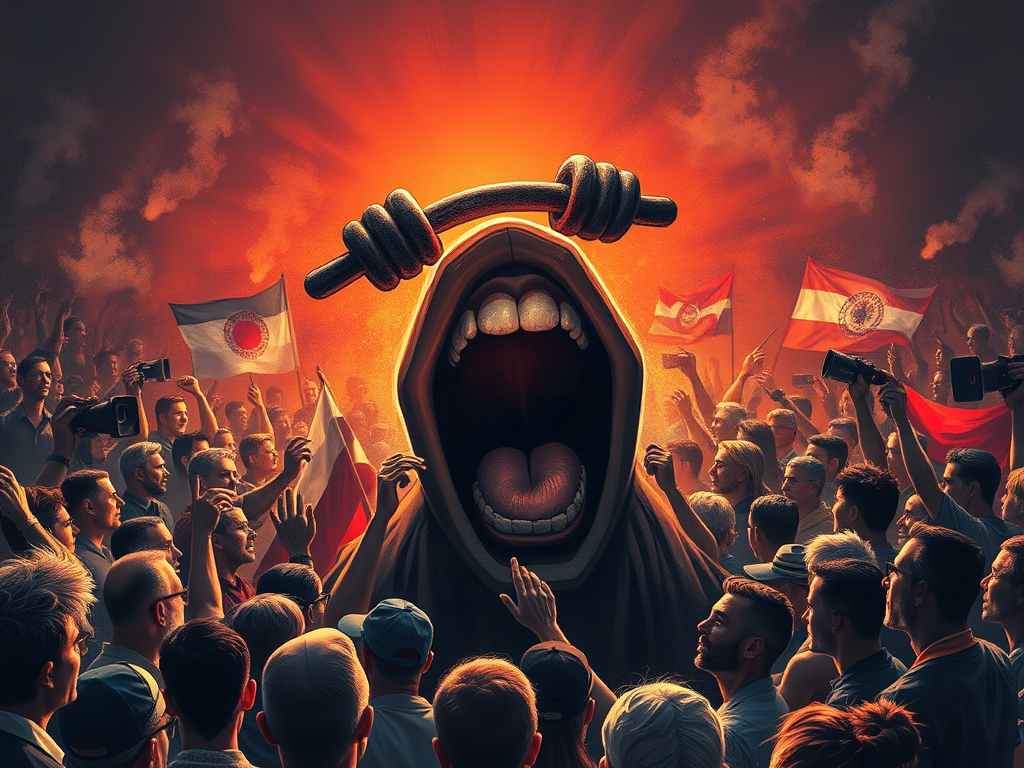
Freedom of opinion is not a privilege, but a human right.
It is non-negotiable, not dependent on majorities, not limited by ideologies or the zeitgeist.
It applies to all people, on all topics, in all times. And it is particularly valuable when it protects uncomfortable, dissenting or provocative opinions.
Freedom of opinion that only allows “agreeable” positions is not freedom – it is propaganda.
The fundamental value of freedom of expression
- It is the heart of every democracy.
- It enables dialog, debate, enlightenment and progress.
- It protects the individual from coercion and collective conformity.
- It is a prerequisite for science, art, religion and political change.
Without freedom of expression, there can be no true knowledge, no political renewal and no personal dignity.
The dangerous relativization
In recent years, freedom of expression has been increasingly relativized, restricted or undermined by so-called “hate speech laws”, “combating disinformation” and “platform guidelines”:
- Dissenting opinions are censored or algorithmically suppressed.
- Critics are publicly defamed, professionally devalued or legally prosecuted.
- Platforms and the media decide what is “still allowed to be said”.
- Opinions are no longer discussed – they are pathologized, criminalized or morally discredited.
This is no longer democracy – it is a dictatorship of opinion in digital guise.
Freedom of opinion is always also freedom to irritate
The freedom to speak also includes:
- the right to be wrong,
- the right to be uncomfortable,
- the right to question social norms.
Because only in a culture that can endure the uncomfortable can the true grow.
Our position
We2030 defends freedom of expression in its full scope:
- No state, no platform, no majority has the right to curtail them.
- Criticism, satire, doubt, alternative positions must be protected, not suppressed.
- Banning opinions does not prevent radicalization – it creates it.
Freedom of expression is not relative – it is absolute.
Because without it, all other rights are meaningless.

Leave a Reply